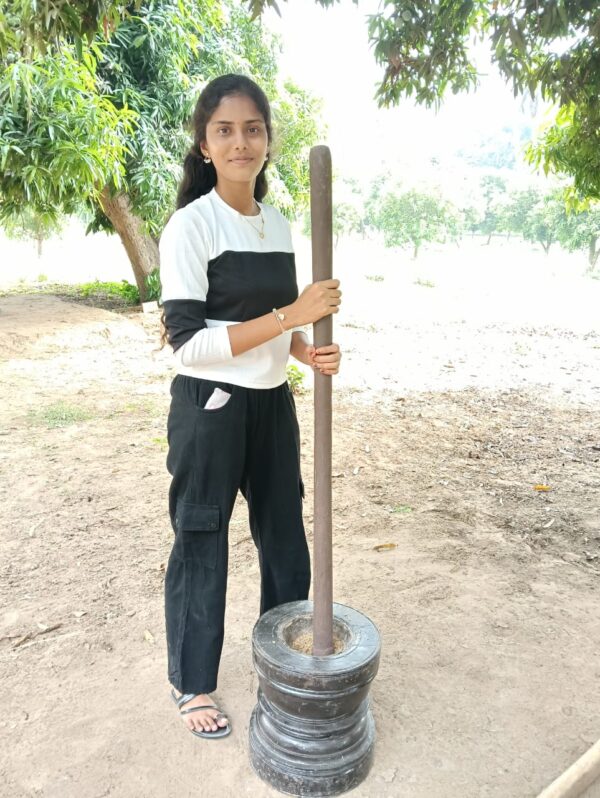
visitors get a hands-on experience of Ural and Ulakkai, one of the most authentic traditional rural practices of Tamil Nadu.
Before modern rice mills, villagers used a wooden mortar (Ural) and long wooden pestle (Ulakkai) to dehusk and pound paddy into rice. This activity showcases the heritage of sustainable, manual food processing.
Improves rhythm and coordination
Builds arm strength
Demonstrates traditional labor techniques
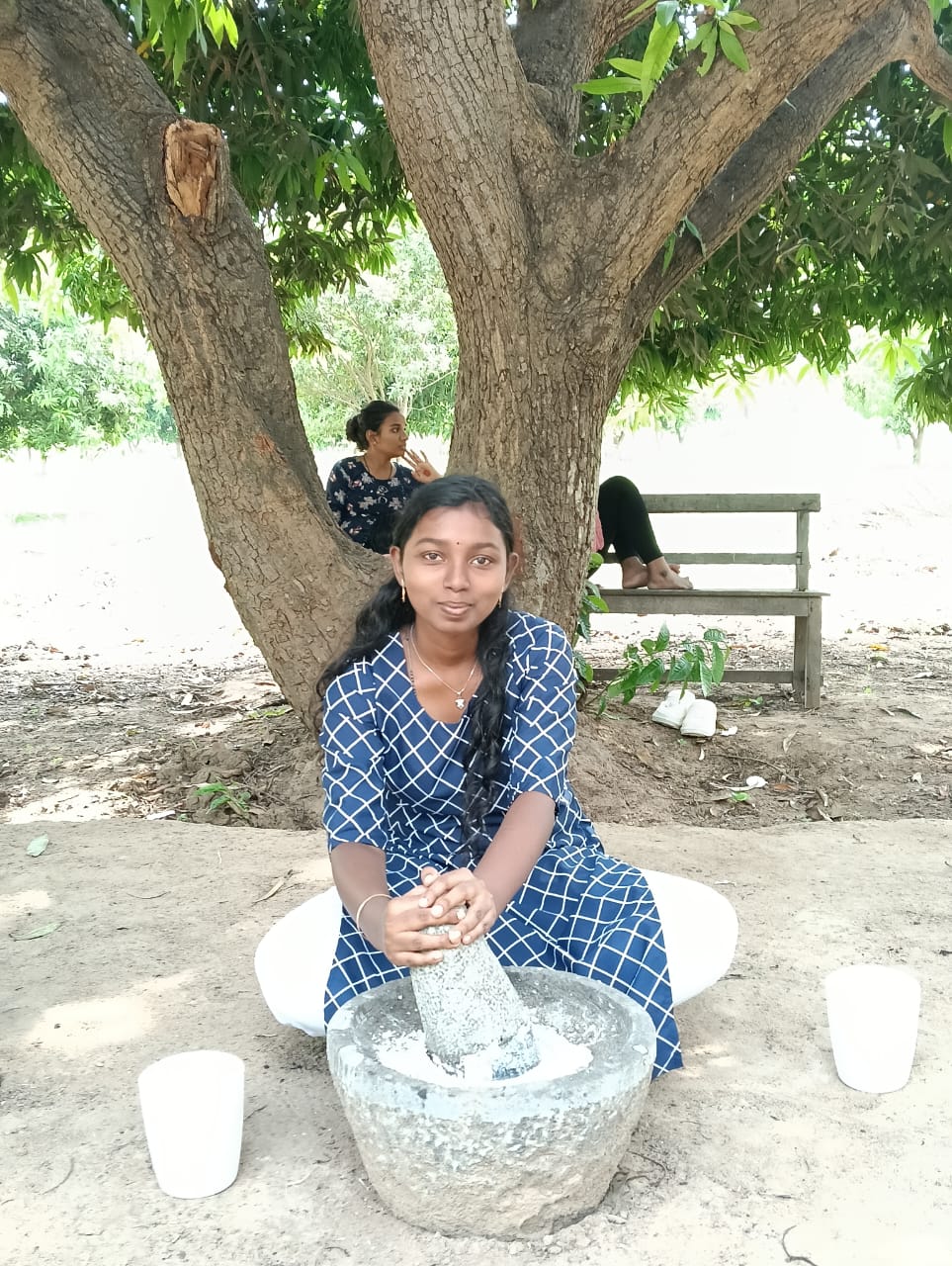
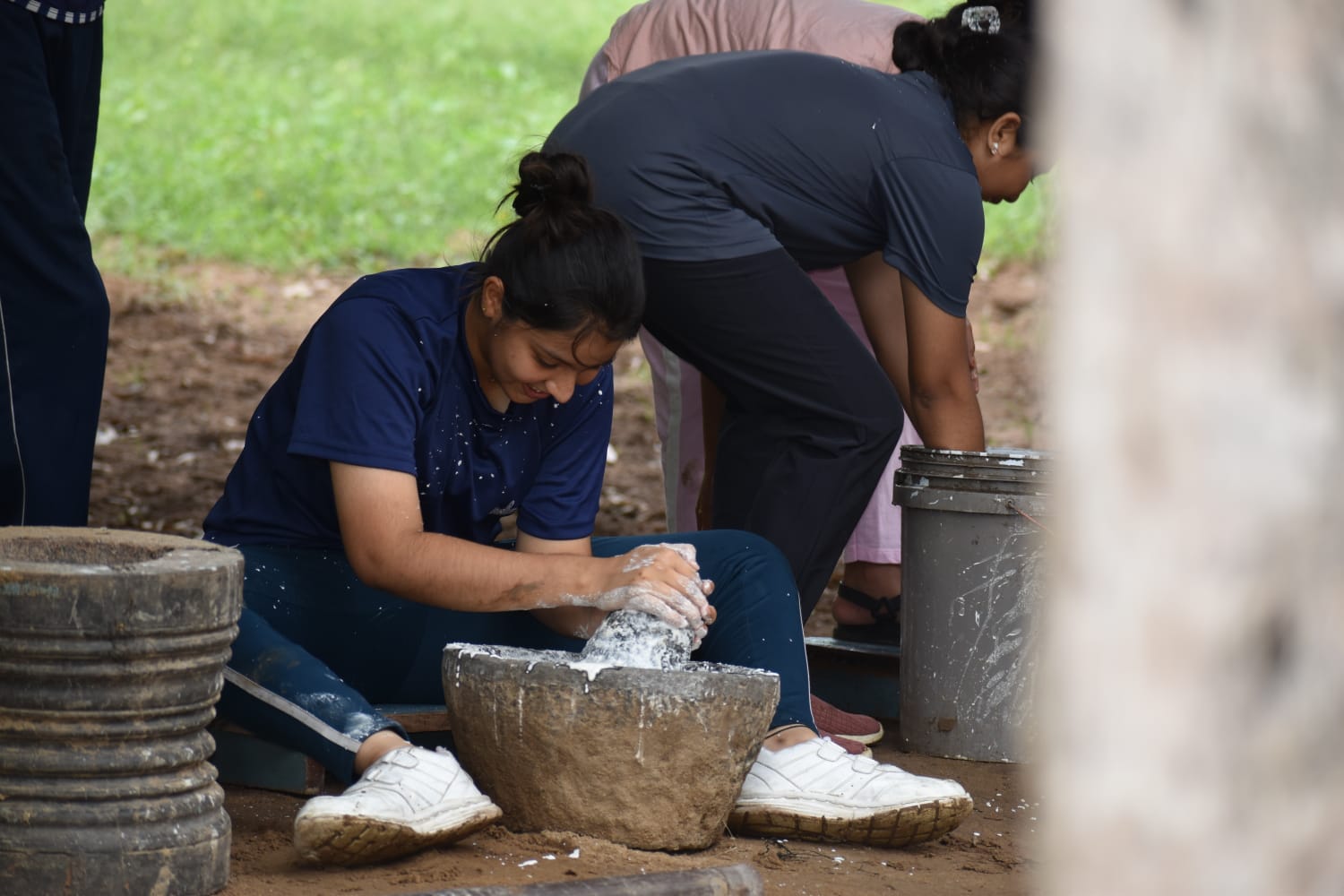
a classic stone grinding tool once found in every Tamil household. Before electric mixies and grinders, families used Aatukal to prepare fresh batter for dosa, idli, chutney, and masalas.
This hands-on activity connects participants with authentic village kitchen traditions and sustainable food practices.
Improves hand coordination
Develops patience and rhythm
Demonstrates traditional culinary techniques
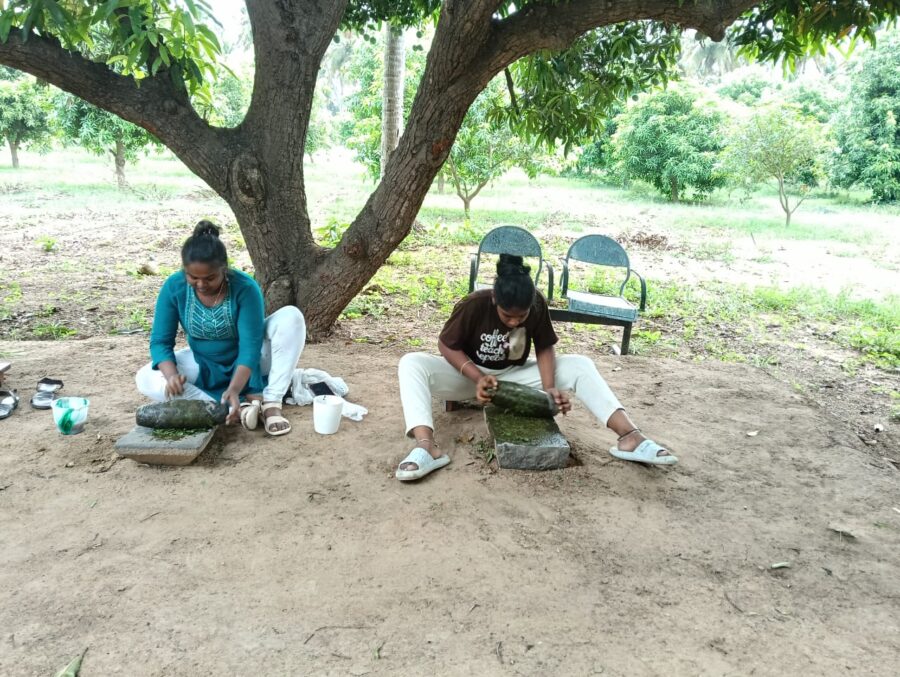
Ammi (Ammi Kal) is a traditional stone grinding tool used in Tamil households to prepare chutneys, masalas, and herbal mixtures. At DB Nature Hub, visitors experience hands-on grinding using a flat stone base and a rolling stone, just like in old village kitchens. Participants manually crush and grind ingredients, understanding how food was prepared before electric mixers became common.
Importance of Doing This Activity
Practicing Ammi grinding helps visitors appreciate traditional food processing methods and sustainable living practices. It demonstrates how stone grinding preserves natural aroma, texture, and nutrients without generating heat. For students, it offers cultural awareness, practical learning, and insight into eco-friendly rural lifestyles, making it both an educational and heritage-rich experience.
Mud Art and Clay Play is a hands-on creative activity where participants use natural mud and clay to shape models, toys, pots, or artistic designs. Conducted in an open farm environment, this activity encourages children and students to explore texture, form, and imagination using eco-friendly materials sourced from nature. It is a free-expression space where creativity meets rural simplicity.
Importance of Doing This Activity
Mud and clay play enhances creativity, fine motor skills, and sensory development.
It reduces stress, improves focus, and encourages teamwork when done in groups. For students, it builds a deeper connection with soil — helping them understand the value of natural resources and traditional crafts.
The activity promotes eco-conscious thinking while offering joyful, screen-free learning in a natural setting.

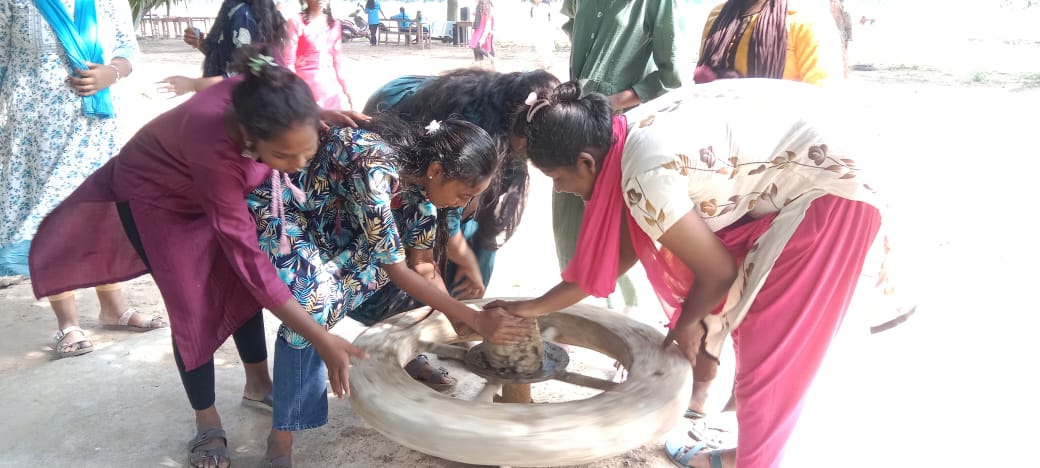
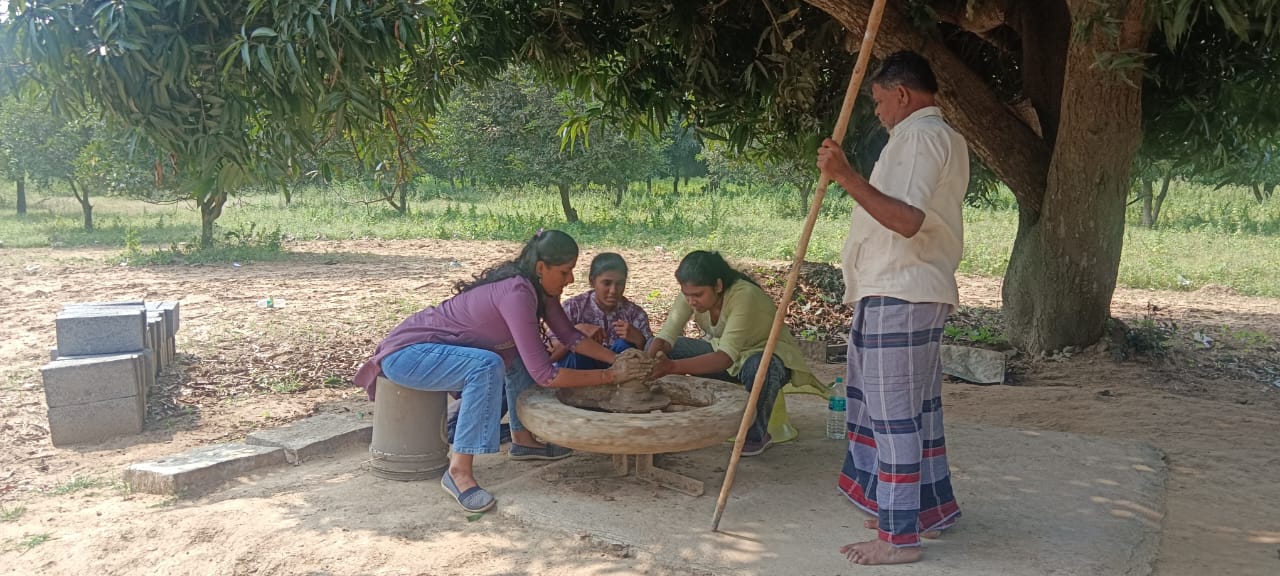
Pottery is a hands-on traditional craft experience where participants learn to shape clay into pots and simple artifacts using a pottery wheel. Guided by demonstration, visitors understand the basic techniques of centering clay, shaping forms, and finishing designs. This activity reflects the age-old village craftsmanship that has been part of Tamil rural life for generations.
Importance of Doing This Activity
Pottery improves concentration, patience, and hand–eye coordination while stimulating creativity.
It teaches students about traditional artisan skills, sustainable use of natural resources, and the cultural importance of clay products in daily life.
Beyond being a craft, pottery builds appreciation for rural livelihoods and promotes eco-friendly thinking through experiential learning.